Introduction
It has been my privilege and honour to work on book projects with a wide range of history education editors, authors and publishers in England and internationally over the years. The books listed on this page are legacies of that work. Links to the books and to related materials are provided below as is some discussion of each of the books in turn.
Overview
Constructing History 11-19
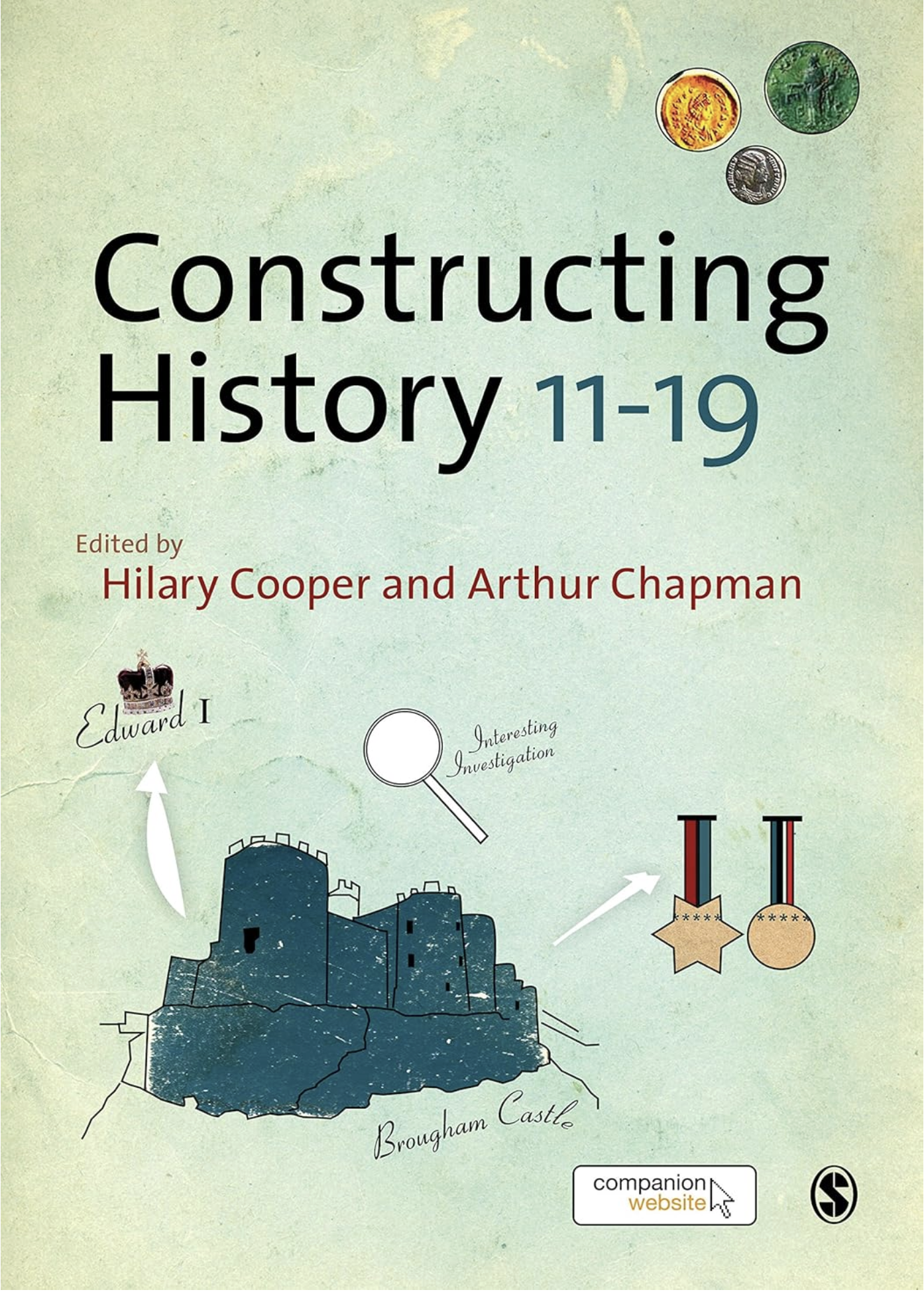
My first book project, Constructing History 11-19 (Sage, 2009) emerged from the history team at the University of Cumbria, where I worked in 2005-8. Thank you to our then boss, Alan Farmer, for encouraging my Cumbria colleague Professor Hilary Cooper and I to collaborate on this project. The key ideas that the book addressed included revisiting and restating the value and nature of constructivist history pedagogy and, equally importantly, working across the divide between primary and secondary education (the first substantive chapter looks at work with Year 6). I learned a very great deal working with Hilary, one of the leading voices in primary history education world-wide.
I winced somewhat, after the book came out, to read Ian Hacking’s demonstration (on page 1 of his marvelous The Social Construction of What?, 1999) just how hackneyed titles with ‘constructing’ in had become, and it was somewhat challenging, again after the book came out, to read some of the more polemical critiques of constructivism in Tobias and Duffy’s Constructivist Instruction: for and against (2009). Nevertheless, I think that the key arguments of the book stand up: the kinds of active, engaging and rigorous history that the book advocates, drawing on resources within the disciplinary community of history educators, remain as powerful now as ever. The anchoring of constructivist approaches in the psychological insight that kids have preconceptions and misconceptions about history that shape the sense (or the nonsense) they make of it, and in the pedagogic insight that effective teaching and learning crafts learning experiences that challenge misconceptions (‘blockers’) and that enable more powerful ideas to be built (‘builders’) remains a vital strength of a constructivist approach. Nevertheless, as I have shown at pages 73-75 of this open access chapter, co-written with Dr Maria Georgiou, although critiques of constructivism are often overstated and run together senses of the term that should be kept separate, there are key respects in which they clearly hit the mark – active learning doesn’t entail physical activity (for example). The thinking’s the thing, not the doing.
‘Constructing’ in the title was originally to have been ‘Constructing and Presenting,’ a phrase that aimed to focus both on the centrality of the active construction of meaning to learning and also on the importance of broadening conventional school history beyond writing, and beyond the limited range of forms of writing that it often involves. I don’t recall why ‘presenting’ was dropped – perhaps two participles felt too clunky for a title. Both aspects are central in many of the chapters. The two that I contributed, with Jane Facey and Barbara Hibbert, focused on using IT functionality to break down barriers and foster reflection and metacognition through dialogue. Students in different parts of England were brought into dialogue with each other and with historians – in one case, in London, and, in the other, in New Zealand. Discussion boards mediated and enabled real debates and discussion – rather than the faux debate that an essay enacts – and students learned how to construct arguments and organise knowledge by writing in conventional ways, but also by scripting and narrating documentary text and by designing websites. It was tremendously motivating for the students to find themselves actually arguing with real people in history class. ‘Meeting’ real historians and having them and – even other real students from elsewhere – comment on and respond to their work had a huge difference to the students’ engagement and, as a result, to their investment in their writing and to the quality of their work.

Joined-up History
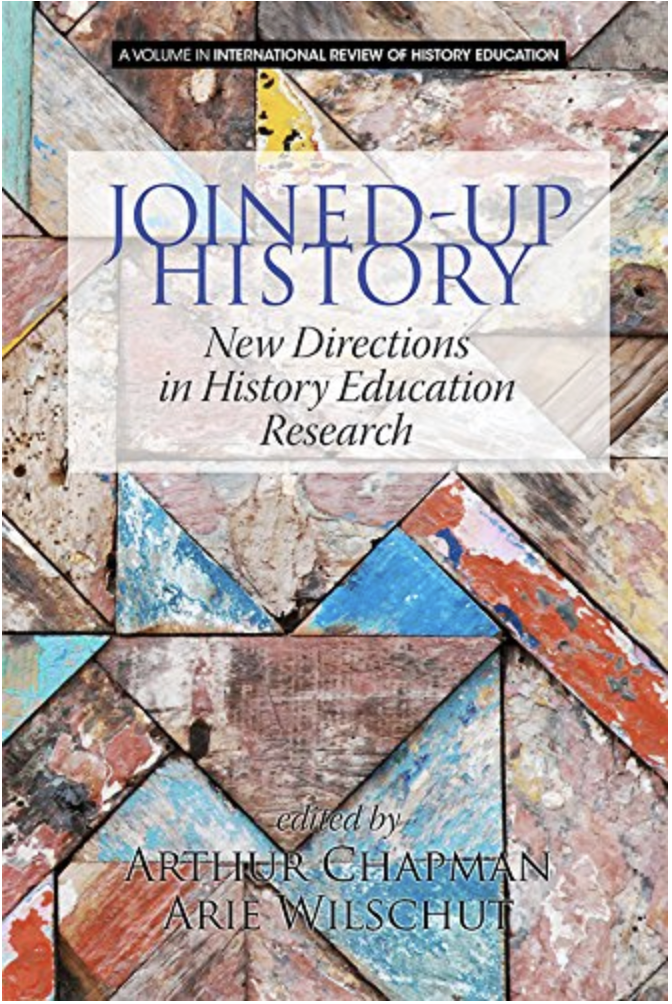
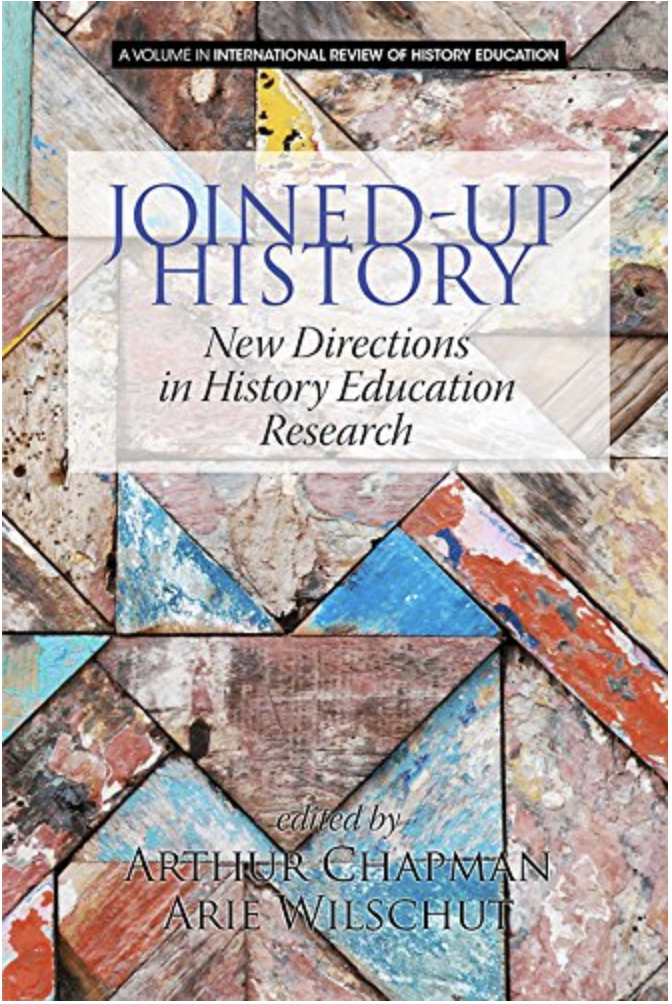
Joined-up History (2015) was a collaboration with Professor Arie Wilschut (Amsterdam University of Applied Sciences) and an opportunity to continue the tradition of international collaboration in history education research developed through the International Review of History Education series, founded by Alaric Dickinson, Peter Gordon, Peter Lee and John Slater in London in 1995.
The book was also an attempt to explore ways of joining-up aspects of history education that seemed to the editors and contributors often to be fragmented. Higlights for me included Wilshut’s chapter, exploring research-based approaches to knowledge-building through curriculum reform in the Netherlands (we were then experiencing an almost entirely research-nescient history curriculum reform process in England) and a chapter by the great Denis Shemilt on the challenges that making narrative connections presented for young people. My contribution, with Emily Goldsmith, looked at making institutional connections between school and university history, drawing on data arising from the History Virtual Academy Project (2007-12).
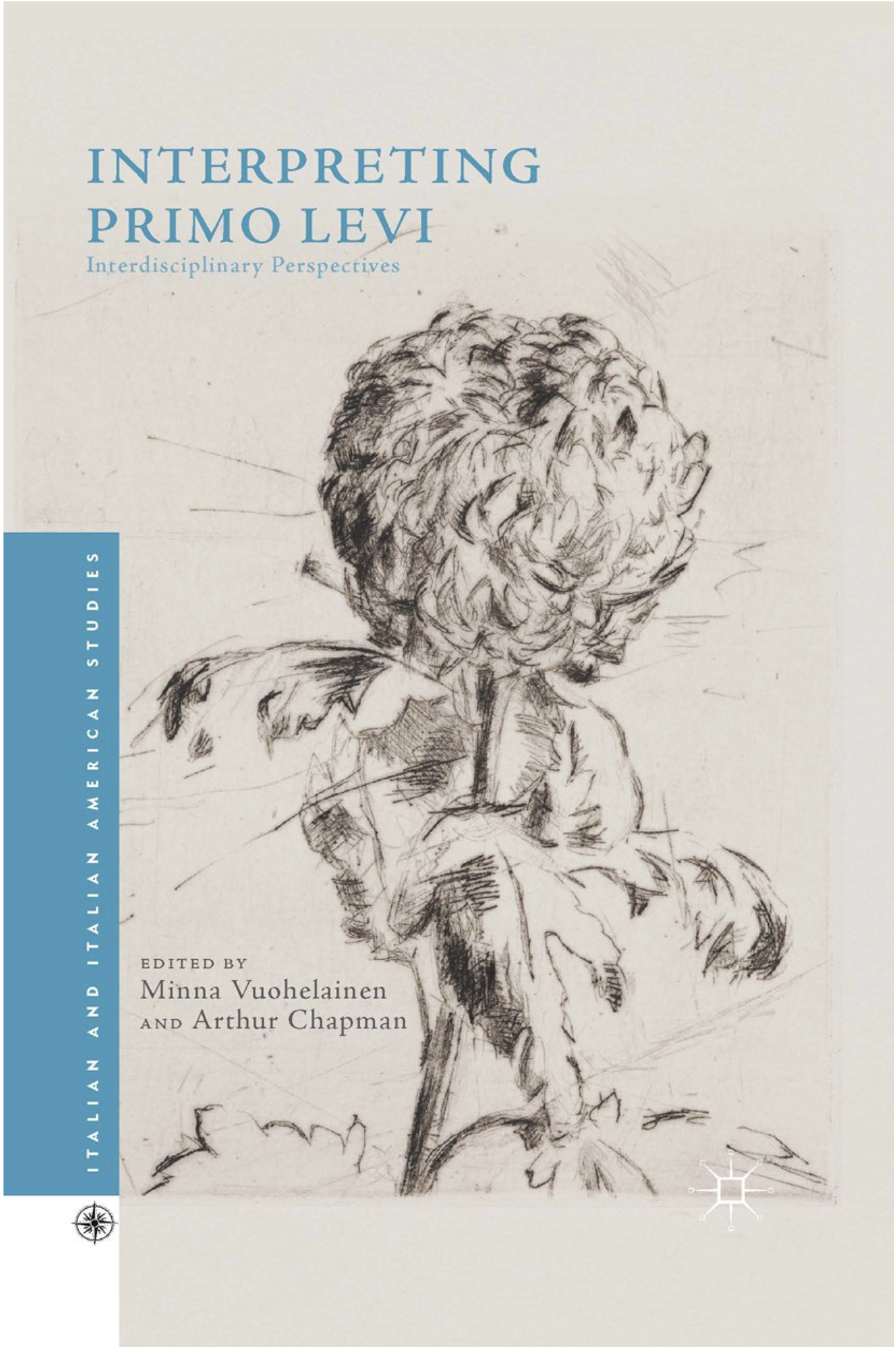
Interpreting Primo Levi
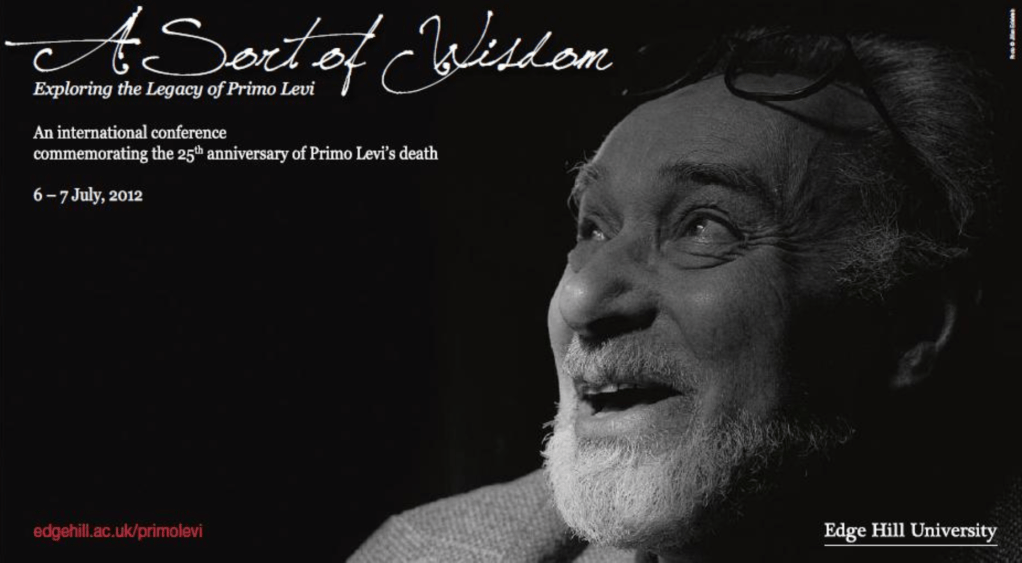
This book project arose from a conference marking the 25th anniversary of Primo Levi’s death, held at Edge Hill University in 2012, that I co-directed with my then Edge Hill colleagues Dr Minna Vuohelainen and Professor Alan Johnson.
The book contained many remarkable papers – including papers by Judith Wolf and Christopher Hamilton, and one of the last of Norman Geras’ many outstanding contributions to political science. My paper never made it into the volume (I guess I was too busy editing the volume to finish writing it). I presented an updated version of it at the 2016 British Association of Holocaust Studies conference in London in 2016, and that version of the paper formed one of the foundations of an open access chapter on the notion of learning lessons of the Holocaust published by UCL Press in 2020.
I first came across Levi’s work in 1992/3, during my teacher training and was immediately affected by the power of his narrative account in If This is A Man of the systematic deconstruction of human dignity and identity performed by the KZ system. Revisiting his work decades later, The Drowned and The Saved became the key reference for me. In the Grey Zone and the Stereotypes chapters in the book, and elsewhere, Levi insistently argues both for the need to contextualise the actions of perpetrators, victims and others (thus, one might say, arguing for a rigorously historically-focused approach) and also for the need to judge and evaluate these actors and their decisions. A position that challenges both positivistic readings of what history can be (‘just the facts,’ etc) and the easy pieties and categoric judgments that we often find in much ‘remembrance’ culture.

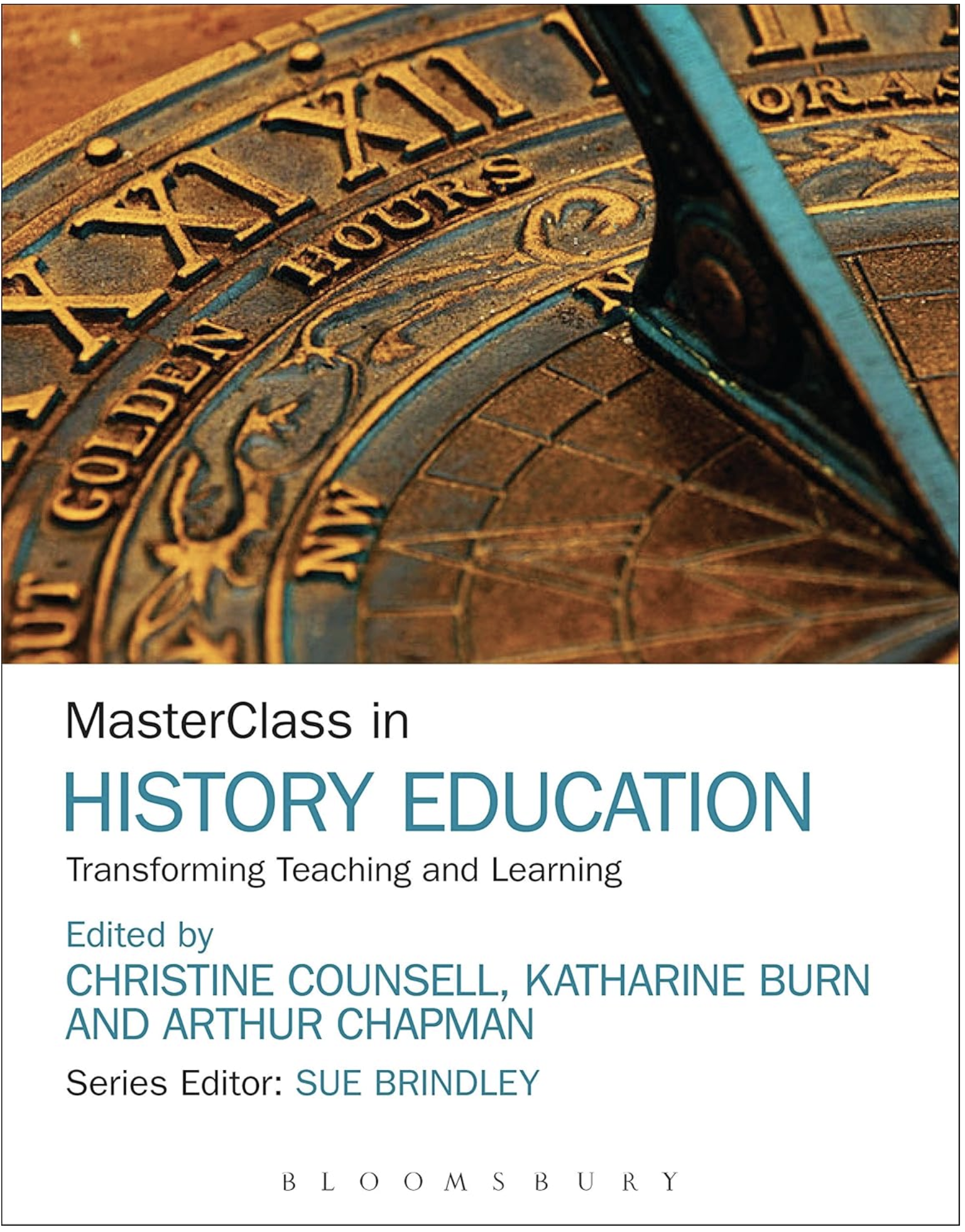
Masterclass in History Education: Transforming teaching and learning
For me, this book project provides strong demonstration of the truth that, like all history-making, history educating is in history, and is bound-up with events and developments shaping the contexts in which it takes place.
My involvement in this project started as a conversation with Christine Counsell on the way back from our participation in a conference in Cyprus in 2010 – before the impact of English Conservative (2010-24) attempts to reshape history education had begun to disturb the equanimity of English history education. Most of the contributions to the book were very much written, then, in a mindset shaped by the New Labour curriculum of 2007 – one very much framed in ‘second-order’ or disciplinary terms, and not in the ‘first-order’ and ‘substantive’ terms that came to dominate once the Conservative reforms began to shift the discourse around history education. My contribution to the book ended-up largely being a critique of the over-estimation of the substantive and the derogation of the disciplinary that characterised much discourse at the time (for example, the dismissal of disciplinary understanding as mere ‘skill’). Discourse that was overly dependent on generic cognitive science and, often, largely ignorant of history education research literature.

The book seemed to me to be very innovative in structure. We started off trying to create a book that teachers might use to do Masters level research in a series in which teachers were typically advised by academic experts on how to proceed. We tried to develop a different politics of knowledge through our volume, flattening conventional heirarchies. The book’s core chapters were by expert teacher-researchers whose expert research formed the substance of the book. Our academic experts were positioned – alongside teachers – as discussants who responded to the teacher-researchers’ chapters.
Developing Historical Thinking: a conceptual approach
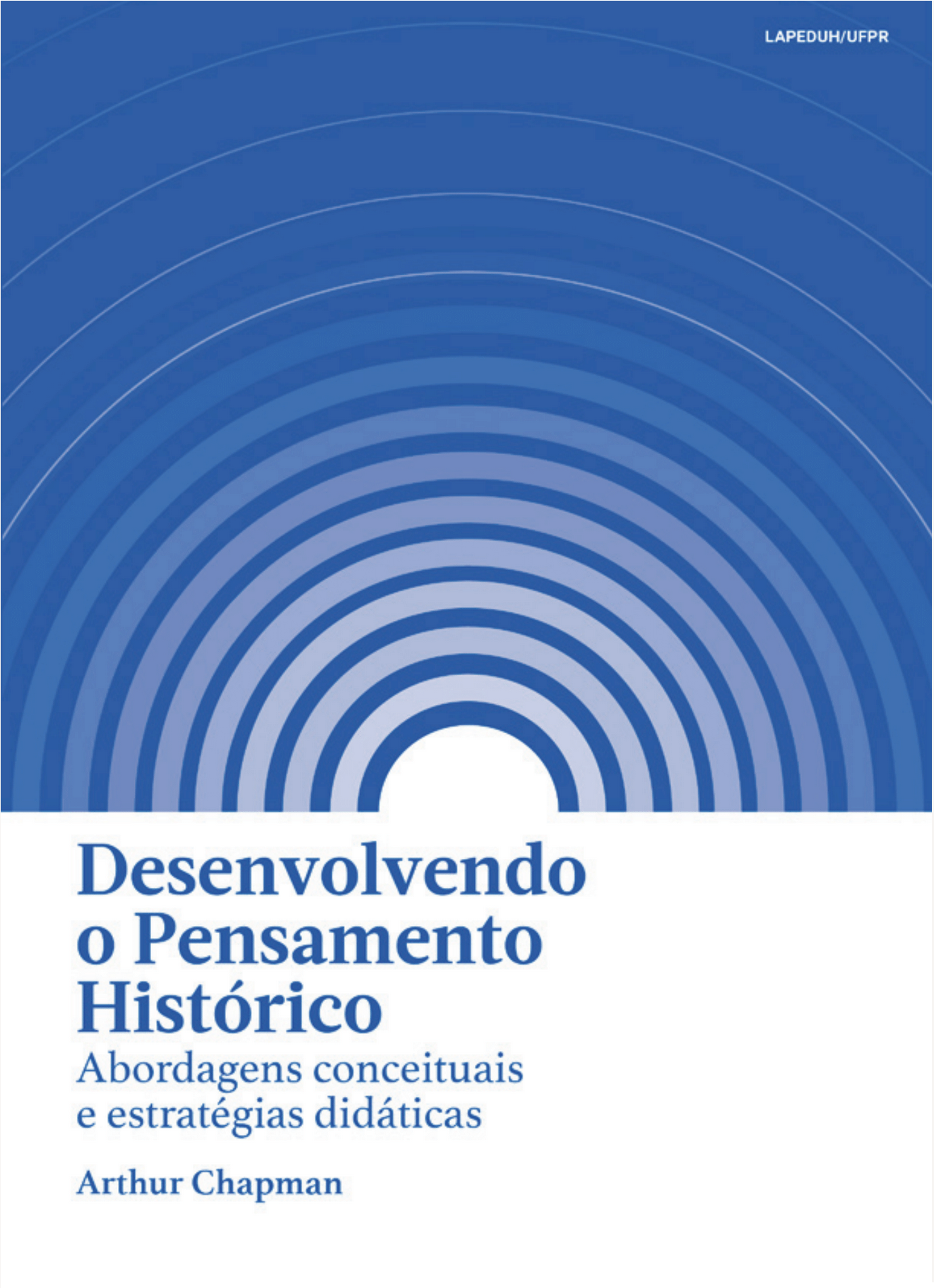
I have been particularly privileged, since 2012, to work closely with colleagues in Brazil – in the LAPEDUH research group at the Federal University of Paraná in Curitibá, and at the University of Cuiabá – and in Braga and Porto in Portugal. Desenvolvendo o Pensamento Histórico was published in 2018 by WAS Edições, Curitiba – translated by Dr Marilia Gago, of the University of Minho, Professor Marcelo Fronza, of the University of Cuiabá, and Dr Lucas Pydd Nechi.
It was inspiring to work closely with colleagues working in different traditions – Brazilian history education involves thinking about both indigineity and post-coloniality, and it is informed both by the work and social justice moblizing agendas of Paulo Freire, and German traditions of history education, structured around developing ‘historical consciousness’. The book collected together a range of papers, written over the previous 15 years, exploring issues related to developing disciplinary understandings in history, historical argument, and to applications of Jörn Rüsen’s work in history education.

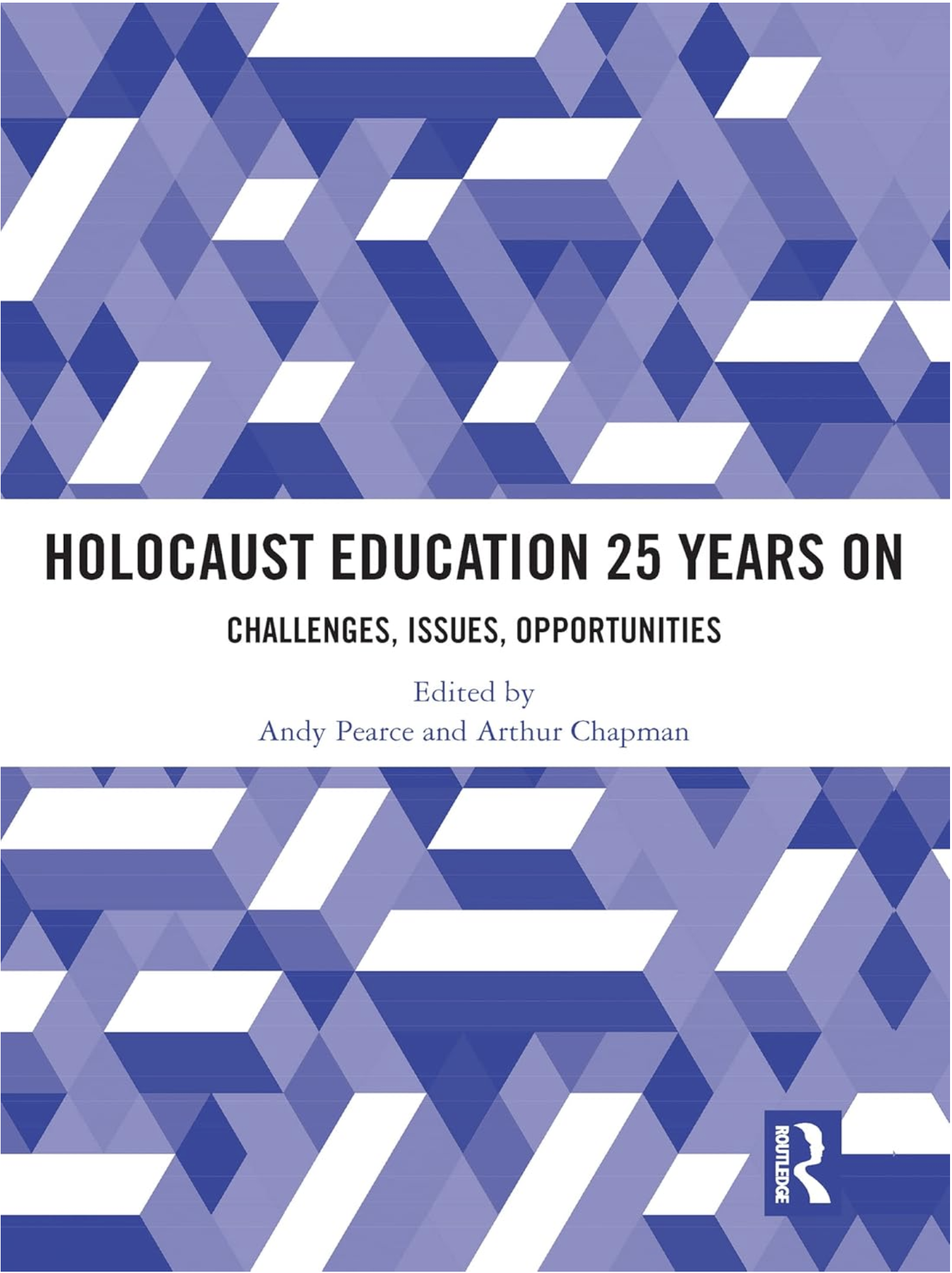
Holocaust Education 25 years on
This volume, edited with my IOE Colleague Dr Andy Pearce, reproduced papers from a 2017 special edition of the journal Holocaust Studies. The special edition focused on the publication, in 2016, of a remarkable research report by the UCL Centre for Holocaust Education looking at student knowledge of the Holocaust.
That research report drew on what must be one of the largest data sets ever assembled in English history education research to date (around 9,000 student respondents) to explore questions around the nature, strength and limitations of children’s knowledge of the Holocaust, and it contained some remarkable findings – not least findings questioning stereotypical assumptions about how ethinicity might impact student thinking about the Holocaust.
My contribution to this volume, written with my UCL colleague Dr Becky Hale, did two things. First it tried to ‘complexify’ how we talk about content knowledge in history – in order to show (as below, from p.290 of the article) that talk about knowledge is not talk about something simple and one-dimensional, as many traditionalist and progressivist accounts of learning both tend to assume.

Second, the article tried to use Hallidayan Systematic Functional Linguistics and notion of ‘transitivity’ (who does what to whom, in grammatical terms) to analyse students’ conceptualisations of the past, and to think about how more and less sophisticated answers could be differentiated using this approach. The approach is a fruitful one, I think, and transitivity analysis can be used for a number of other purposes in history education, for example to look at how narrative can be used to distort messaging in history, and also how narrative can be realised at the micro level within a text, as my contribution to this book shows.

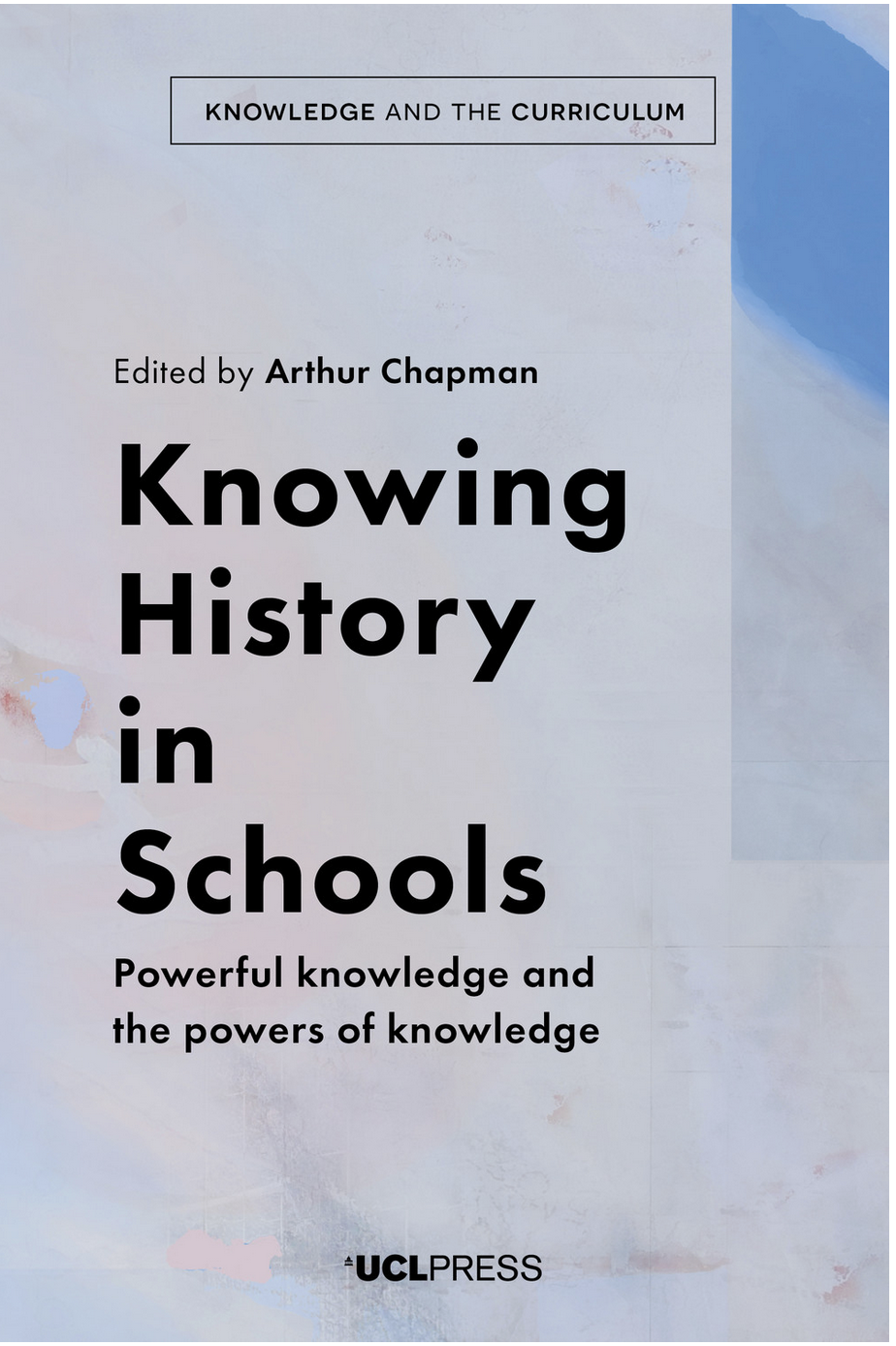
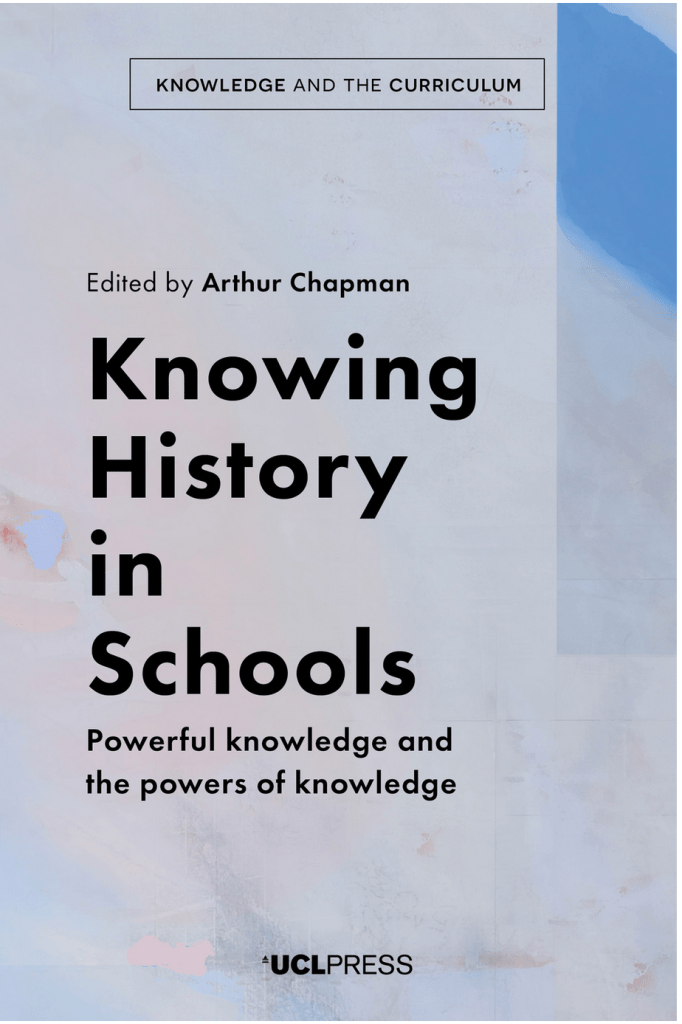
Knowing History in Schools: Powerful Knowledge and the Powers of Knowledge
Like the Masterclass book above, Knowing History in Schools arises from a particular political context – the so-called ‘knowledge turn’ in English education, a process that it has always seemed to me to have involved at least two distinct and distinguishable processes, at least where history education is concerned: on the one hand, political interventions by culturally traditionalist and restorationist Conservative politicians in a context that they neither fully understood nor particularly care about in its own terms as a field of practice (history education); and, on the other hand, ongoing educational debates in the national and international history education community about the relative importance of different types of knowledge and understanding in history education.
Many in English history education were concerned in the late 2000s, that history education was threatened by movements focused on generic skills and general learning processes that diminished interest in both history as a discipline (a form of knowledge), and history as knowledge about the past (a body of knowledge) – a concern that was expressed, for example, in a 2007 edition of Teaching History focused on Disciplined Minds that I edited. In this context – a context that helped shape the Masterclass book discussed above – Michael Young’s work on the importance of disciplines and disciplinary knowledge became an important reference for many English history educators. A decade later, concerns had shifted in response to a different kind of threat – a threat not from generic knowledge but from an equally antidisciplinary reduction of historical learning to specific bodies of factual knolwedge, driven by politicians’ enthusiasm for E.D.Hirsch’s work on cultural literacy. Again, this proved to be a context in which Young’s work had a lot to say to history educators.
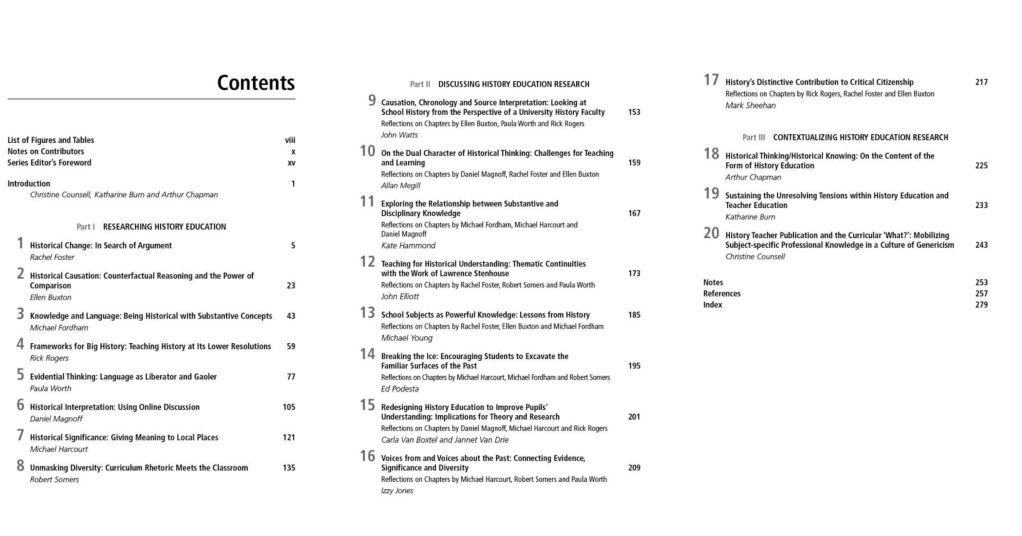
Knowing History in Schools derived from a 2017 BERA Conference symposium on knowledge building in history that a number of history educators contributed to and for which Young acted as discussant. The book widened this discussion out, bringing international colleagues in, for example, in relation to debates about relationships between conventional ‘Western’ disciplinary knowledge and indigenous histories, or in relation to debates on interdisciplinary matters of pressing contemporary concern, such as migration and the Anthropocene. Young reprised his role as discussant by answering questions posed to him by contributors in the final chapter of the book, and also by responding to some of the book’s themes.
The book was not advocating Young’s ideas – the point was to discuss them. The title crystalised my thinking arising from our discussions by pointing to the central importance of knowing, a process to be engaged in involving mastery and application of various cognitive resources, rather than knowledge, a reified thing that might be grasped and mastered. It was interesting to read in Young’s chapter about his reservations about how his ideas had been misappropriated and misunderstood on the Conservative right, and also about how he wished to move away from the notion of ‘powerful knowledge’ and towards thinking in terms of the ‘powers’ that mastery of knowledge disciplines might enable in young people.
It was interesting to note, more generally, that by 2021 a form of disciplinary corrective had been applied to the dogmatic knowledge enthusiasms of some of our Conservative politicians – as the contrast between two almost simultaneous interventions in July 2021 indicated, one from Nick Gibb, the English Schools Minister at the time, and another from Ofsted, the English schools inspectorate.
History Education and Historical Inquiry
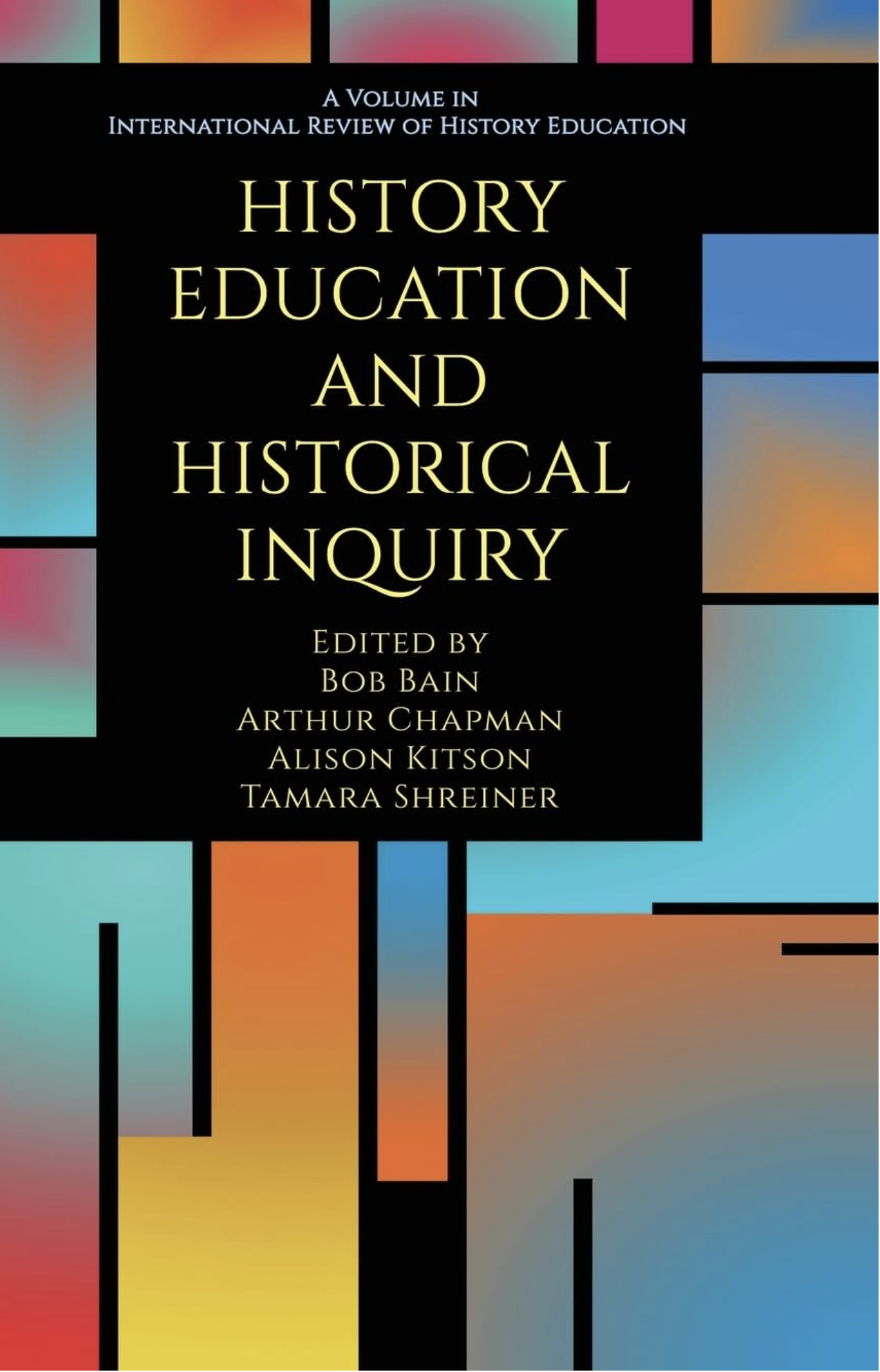
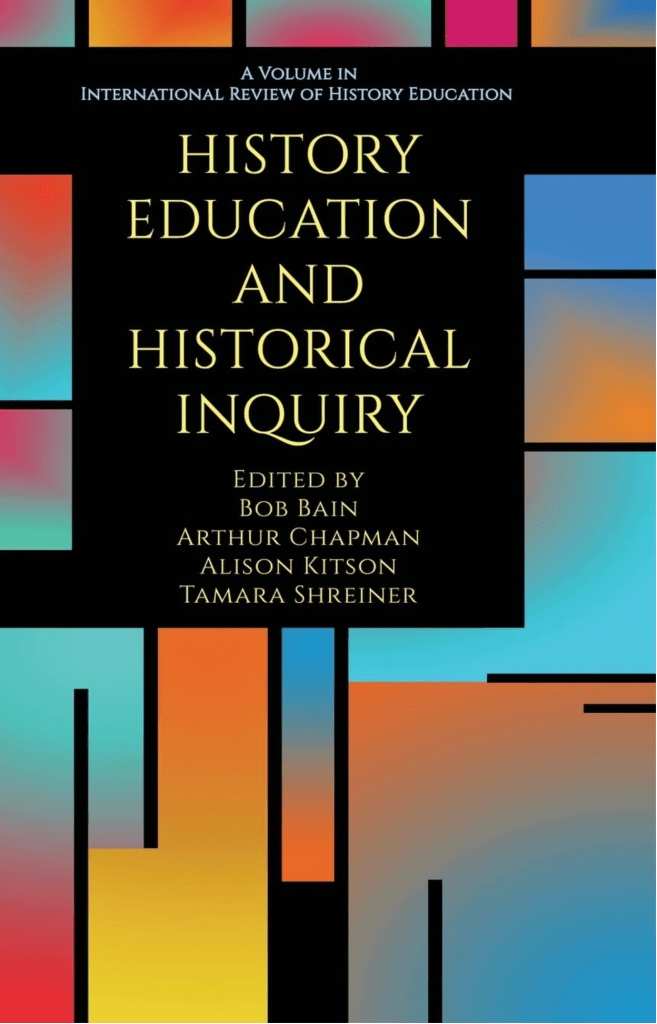
This book arose from a conversation with Bob Bain (University of Michigan) in a cafe in Taiwan in 2015 in which it emerged that we both were finding historical inquiry (or enquiry, in English contexts) was increasingly subject that vocal criticism that almost entirely missed the mark. Frequently, for example, criticism’s of inquiry assumed that history educators were proposing, through inquiry, to turn school students into expert professional historians (rather than to develop something analogous to historians’ thinking in schools at an appropriate level of developmental complexity). Or, again, critics of inquiry in history, who often seemed to have little knowledge of history education practices, seemed to be tilting at windmills and criticising something that we rarely, if ever, found in history education classrooms, namely entirely open discovery learning. We eventually decided, as a result of this conversation, to propose a volume on inquiry in the International Review of History Education series. The proliferation of uncomprehending or ill-informed external critique of inquiry continued and developed was we worked on the book – as here, to give one example – and our experiences were confirmed by other contributors to the volume in other contexts, for example, Canada, where the same misplaced criticisms recurred.
The resulting IHRE volume was constructed through an open call for papers and was, in the end, comprised of 17 papers and a substantial series introduction. The book provides and antidote to decontextualised and generic critiques of inquiry in school history by providing concrete exemplification of what inquiry actually looks like in school history in different parts of the world. The examples of inquiries shared by our authors were all structured, to one degree or another, and in one way or another, by teachers and not open discovery process where all decisions were to be made by students. Inquiries were often, also, as much curricular devices to organise and sequence engagements with content and knowledge-building as pedagogies. The volume also contained valuable reflections on why teachers might find inquiry difficult to organise and suggestions for how inquiry could better developed in history classrooms, for example, how it might be ‘bounded’ or scaffolded in various ways, allowing teachers to start small with relatively limited uses of inquiry and then to build gradually towards more complex or developed uses of inquiry to structure historical learning.
Developing Students’ Understanding of Historical Interpretations
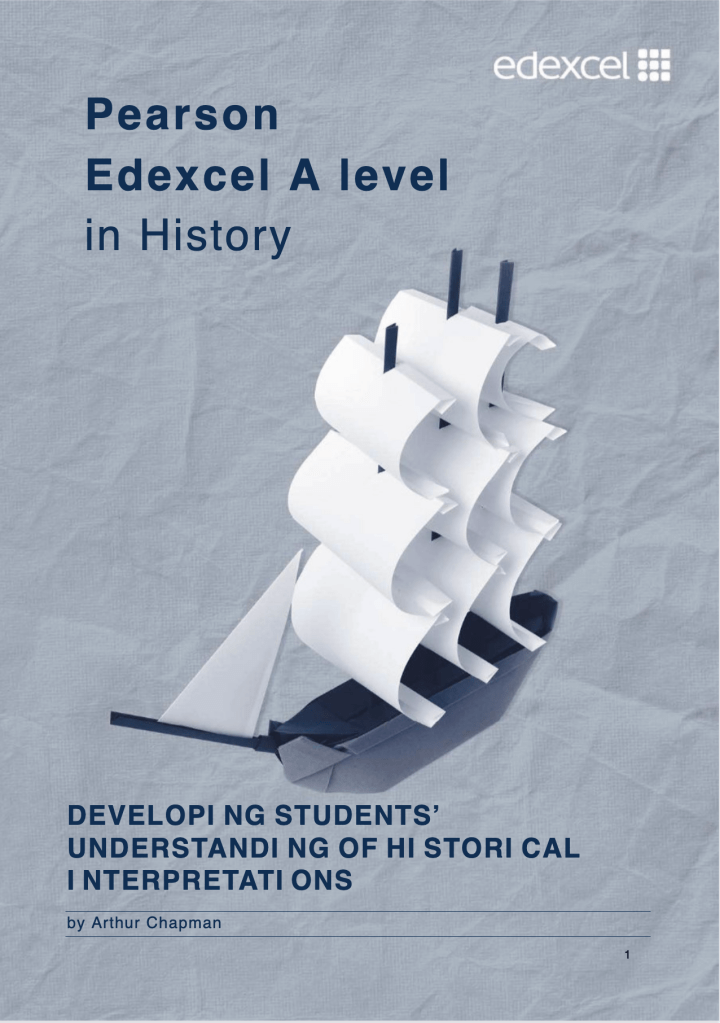
Strictly speaking, this final item isn’t a book, but a document. It involved quite a lot of thought to produce, however, and it relates to my central research concern so it merits mention here. It is also something that I expect to draw upon in developing one of the monographs that I mention in the final section below, so it can intimate some of the contents of a book that will, I hope, eventually arrive on this page.
I did a lot of work with Pearson in 2014-16, focused on Advanced Level History (students aged 16-19 years). Initially, this work focused around textbooks and included the development of a historical thinking conceptual progression map, looking at second-order misconceptions in history, and in work on the new series of A Level textbooks that Pearson published in 2015, for which I provided a general introduction. A second strand of work focused on developing advice on teaching and learning about ‘historical interpretations’ (roughly speaking historiography, or understanding of the fact that histories are plural and often multiple and competing). The full version of Developing Students’ Understanding of Historical Interpretation was published online in 2016 and is available here on my academia.edu site. The full version does not represent Pearson’s examination board advice for candidates or teachers. A shorter abridged version is available on the Pearson A Level history website.
Current Projects

As this page indicates, I have spent a great deal of time over the last fifteen years editing books – and this is in addition to spending at least the same amount of time editing journals of various kinds since 2006. Although I very much enjoy editing and pulling books and editions together, my intention is to minimise this kind of activity in future and to focus, instead, on writing monographs.
I am hoping to make a contribution – negotiations and contracts permitting – to the marvellous Cambridge Elements series Elements in Historical Theory and Practice, focused on history education, in 2026. I am also preparing a book proposal for UCL Press (I expect) for a volume on historical interpretations, my constant central area of concern since I began to work in history education in 1992 and, very probably, although I didn’t call it that at the time, since I became interested in methodologies in the history of ideas as an undergraduate in 1987/8.
Page last edited: 30th July 2024
 The Camel's Back
