What is narrative ethics?
History education should pay more attention than it currently does to what I am going to call ‘narrative ethics.’
Narrative ethics relates to practical and empirical questions about the positive and negative effects that stories can have on their audiences, and opens-up ethical questions about the kinds of story that we should and should not tell, and that we should and should not credit, promote, share, and so on.
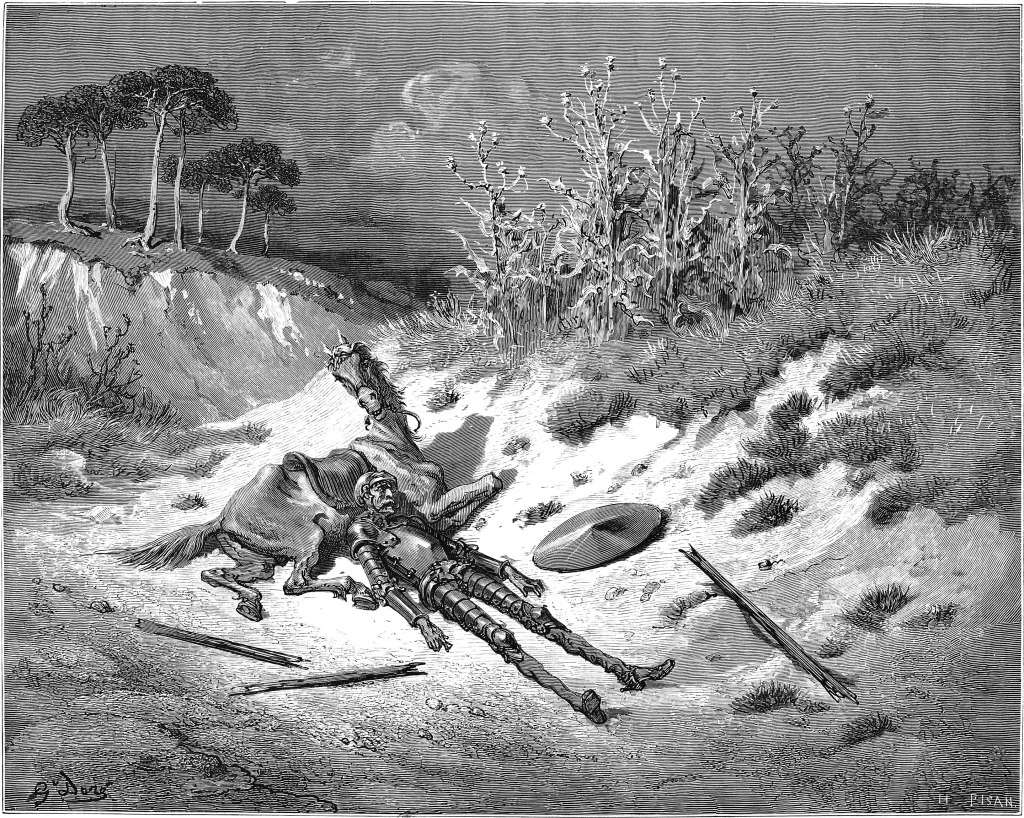
Stories are both enabling and dangerous things – tilting at windmills is, no doubt, an enjoyable pass time, even if it is a futile one. Both Madam Bovary and Don Quixote‘s (fictional) lives suffer as a result of the kinds of stories they lived and told themselves. We should care about the kinds of story that circulate around us, then, about the kinds of story that inform our actions, and the kind of tales we tell ourselves about who we (and others) are and can be.
The pedagogic aim of narrative ethics should be first, to practice responsible story-telling in history classes as teachers – and, by transfer, in other contexts; and, second, to nurture students’ narrative responsibility, their disposition to tell responsible stories and their aversion towards irresponsible stories and irresponsible story-tellers.
Narratve ethics is a topic that I have written about before – without explicitly calling it that – for example here in Public History Weekly, reflecting on the work of Tzvetan Todorov, and, in a sense, it lies at the heart of all history education, since history concerns itself with the question ‘What can we reasonably claim, say and believe about the past?’ I have written about narrative ethics here, also – again with calling it that – reflecting on irresponsible stories told about history education.
My thinking on this topic has been influenced – as have so many other aspects of my thinking about history – by the work of Peter Lee, in particular, by his emphasis on the importance of developing ‘dispositions’ in history and not just knowledge and understanding (see Lee’s chapters here and here, for example). Learning a discipline is learning a practice and a way of going about things, and narrative responsibility should be one of the historical virtues.
Getting the story right – more than the sum of its parts
Traditionally, history education might have regarded narrative responsibility as an epistemic question, concerned with the truth of claims. That’s a reasonable way of approaching questions of credibility, clearly – minimally, a credible story is a story made up of credible claims. However, there is more to narratives that the sum or their parts – stories have form as well as content and thinking responsibily about stories means thinking about both these dimensions of narrative. This is one of the key insights of the so called ‘narrative turn’ in historical theory – a point made, for example, in Frank Ankersmit’s Narrative Logic, or in the various works of Hayden White, not least Metahistory and The Content of the Form. I have developed that point in various places – for example, in my contribution (pp.121-143) to the open access book Teaching History to Face the World Today (2023, Peter Lang), in relation to the Brecht poem ‘Alles Wandelt Sich’ and the Hitler narrative discussed below.

Brecht’s poem consists of four statements (such as ‘We plant trees for those born later’) that are presented twice in different orders, linked by varying connectives (‘but’ and ‘and’). What is highly instructive about this is that these changes of sequence and connection have profound semantic consequences. The meaning of the first stanza is entirely altered in the second, simply by changing the form of narration, and without altering the content of any of the component lines.
This meaning-transforming power of narrative – operating independently of the truth of a narrative’s internal contents, or propositions – is apparent also in the summary narrative about Hitler that Lee produced in the open access book How Students Learn: History in the Classroom (at page 59), in which the overall narrative is created that is a transparent distortion of history, even though, in some sense at least, every single one of the propositions that make up the narrative might be considered ‘true.’
Telling the right kinds of story
Every page a victory.
Bertold Brecht, Questions from a worker who reads, 1935 (extract)
Who cooked the feast for the victors ?
Every 10 years a great man.
Who paid the bill ?
So many reports.
So many questions.
The power of form to shape meaning is apparent, in different way, in another of Brencht’s poems – ‘Questions from A Worker Who Reads.’
Brecht’s ‘Worker’ reads convential history – the kind of ‘history from above’ that much historical writing has practiced since the disicipline was formalised in the nineteenth century under the flag of the nationalist state. And he reads that genre of history with an informed and sceptical gaze. The Worker knows that the kind of world-model he is being offered in these history-from-above great-man histories is at best partial and certainly implausible. It is a world structured by the actions of leaders who seem to be able to do everything by themselves – since only their agency is foregrounded in this genre of history-making. They ‘did’ it – without cooks, without armies, without stone masons, and, in short, without the working class. This is the kind of story that a worker is highly likely to want to question, particularly if supported by the traditions of critique and world-understanding nurtured by the labour movement.
The worlds of history – and the kinds of worlds that histories offer us – have broadened immensly since the 1930s. History from below, of the kind practised, for example, by E.P.Thompson, has served to ‘rescue’ many of the dramatis personae of the past hidden from history by the elite-focused gaze of high-political and ‘great man’ history that Brecht’s Worker reacts against. And so, of course, have other historiographic developments – the rise, for example, of social history, of women’s history, of Queer history, of post-colonial history, of Indigenous histories, and so on. These ‘varieties of history’ should, naturally enough, be central to history education, since history education is about understanding the multiple ways in wich sense can be made with and about the past.
This consideration adds awareness of, and the ability to distinguish between and compare, different types of history in various ways, including in terms of their relative strengths and limitations, to the goals that narratively informed history education might set itself. There is much more to narrative difference that simple sequence. And these differences have ethical consequences, since generic differences in types of history have consequences for who history sees and who history misses, and for who gets ‘hidden from history‘ and for whose pasts are ‘silenced.’
Toxic Narrative
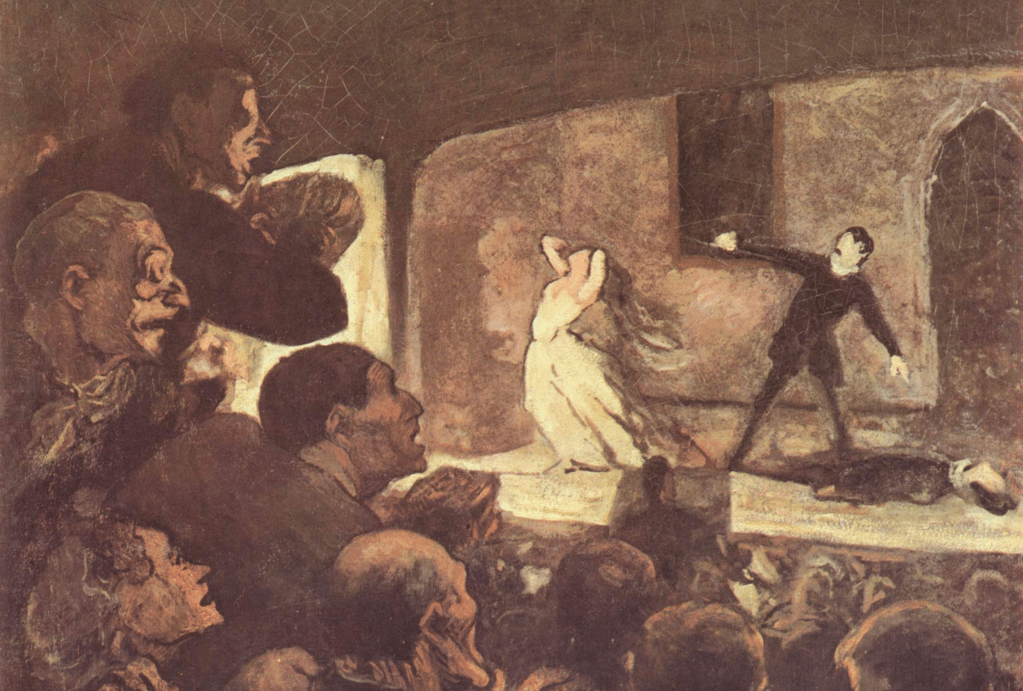
Questions of narrative ethics have increasing urgency, it seems to me, in our contemporary present – a world increasingly structured, it would seem, by polemical and simplistic melodramatic stories whose form is problematic and whose effects can be highly dangerous, as we saw on the 6th January 2021 in Washington and as we are seeing, again, in England and Northern Ireland at the time of writing, in late July and early August 2024.
Conspiracy theories – better called fantasies than theories – typically have very simplistic plots. They feature malign and hidden agents whose covert intentional actions are held to be responsible for negative features of the world, and, in particular, for damage to the lives of ‘good’ people, with whom the narrators of such stories identify. Their melodramatic character emerges as soon as we describe them. They pitch unequivocally ‘good’ and unequivolcally ‘bad’ characters against each other (as if the world were normally that simple, binary and two-dimensional), operating an ‘us’ and ‘them’ ontology. Such stories are manichean and implausible and toxic to democracy by that fact alone, as Todorov has argued, since they categorise and selectively other groups of our fellow-citizens.
Conspiracy fantasies are also ignorant of one of the most basic insights that one learns from the human sciences (including, of course, history) – namely that most developments in human affairs are the unintended consequences of the interaction of numerous actors operating independently, few, if any, of whom may have intended the actucal consequences that obtain at any particular time. The world of conspiracy fantasy is a much simpler and more satisfying one. A world in which things happen because some identifialbe and blameable group or person wanted them that way. It is a world that has the shape of a simple personal story – a shape that the real interpersonal and social world rarely actually has. It is an illusory – if satisfying – world in which someone (and never, of course, ‘us’) is to blame.
Simple stories work for many reasons and, not least, because they key into quite basic aspects of human psychology – as researchers like Matthew Williams have argued. ‘Us’ / ‘them’ dynamics are central to human sociality – ‘we’ have typically lived in groups throughout human evolution, and defending our in-group against threats works with the grain of that history. This is one reason why simplistic binarizing stories are so dangerous: when we are living a simple binary story, we can easily be triggered into violent actions, through narrative twists that turn the ‘them’ we identify against into a threat to the ‘we’ that we identify with. If ‘we’ become convinced that there is a ‘they’ out there who are hostile to us and responsible for our real or perceived misfortunes, and if we start to believe that ‘they’ really are coming for us and our families, then all kinds of aggressive action can come to seem both reasonable and necessary.
Narrative ethics involves, in at least part, attending to our narrative vulnerabilities – and becoming aware of ways in which they can be triggered and exploited. Reality is always multifaceted and never structured into clear ‘sides’ and neat binaries. We all contain multitudes and have hybrid identities, a fact that makes the notion of a simple group that we might identify with, and another we might identify against, a fairly absurd proposition.
There are, no doubt, historians who promote conspiracy theories – historians are human beings and binary thinking and threat reactions are part of our natural-historical inheritance. Nevertheless, I’m persuaded – and given some hope – by the argument that Raphael Samuel developed in The Enemy Within, his book on the 1984/5 Miners Strike, that historians are likely to be more ‘resistant’ to ‘conspiracy theories’ than non-historians (1984, p.13), a claim that points to the potential power and benefit of history education.
The notion that this strike was the work of ‘the enemy within’ that the then British Prime Minister Margaret Thatcher propagated, was, as Samuel noted, both implausible and a conspiracist trope. It was part of a melodramatic self-serving story that pitched nefarious ‘union barons’ against a virtuous ‘Iron Lady.’ We might also add that it was a profoundly undemocratic story – a metaphor that turned an organised group of citizens in dispute with the government, into an ‘enemy’ of the state that could legitimately be violently ‘attacked’ – as, of course, miners were at Orgreave and elsewhere.
It seems to me that Samuel’s response embodies the kinds of democracy-enhancing wisdom that one hopes a history education might aim to develop more widely.
“Historians… will know that leaders… are not so much causes as effects… They will know that decision-making is not an event but a process in which a thousand different circumstances conspire. And they may remember – if they are readers of Tolstoy, or students of the First World War – that in a battle nobody is less in command than the generals… A strike is not a controllable process but a huge wave of happenings… Even when a strike appears to be directed from above, its energies come from below….”
Raphael samuel, the enemy within, Pit Villages and the Miners’ Strike of 1984-5, 117-119
Conclusion
What the observations above point to, I think, is the conclusion that we must attend to how stories are told and structured, as much to the truth of the ‘facts’ contained in them, if we want to make an overall call on story-credibility. However important facts are – and they clearly are important – they are emphatically not ‘the whole story,’ as it were.
Some kinds of story are incredible simply because of the way they are told and simply because of the kind of story that they are. Other kinds of history are profoundly limiting and limited in the kinds of human experience they include and exclude and in the groups whose experiences they attend to and/or exclude.
As Samuel’s observations about conspiracy fantasies, above, indicate, there’s much more to assessing the credibility of history-stories than simply attending to sequencing and order. Form includes a range of considerations – including plot types, agent types, forms of causality, and much else. Form also includes attention to the types of history being told – histories that focus on ‘leaders’ only, for example, presume as much as they explain and exclude as much as they account for – just as masculinist stories, Eurocentric stories, and other limiting types of narrative do.
Learning what kinds of story one might find credible, or at least be disposed towards and in favour of simply because of their form is, it seems to me, part of what learning history means. ‘Facts’ matter but checking story-credibility involves so much more than ‘the facts’ and ‘checking’ the facts. Noticing and evaluating the form, the telling, and the form of the telling of a story matter just as much as thinking about claims and truths, where evaluating story-credibility is concerned.
And, of course, one can only care about questions like this if one has come to the narrative-ethical insight that stories and story-telling matter – that stories can legitimate and enable injustice and, also, of course, that stories can help to challenge injustice and change the world, and that there are kinds of story we should not tell, attend to, or help to share and spread.
Coda
This is the first of a series of posts. There will be at least three – ‘if the accident will’ (to borrow a line from Slaughterhouse 5). The two that follow will pursue the questions of narrative ethics in dialogue with the work of Kurt Vonnegut, a great story-teller and reflector on the good and the bad that stories can do. I will focus, in particular, on Vonnegut’s writing about the bobming of Dresden – work that points, I think, to both the power of focusing on narrative when evaluating stories about the past, and also, despite Vonnegut’s best efforts, to the limitations of a solely narrative approach.
Last edited: 25 January 2025
 The Camel's Back

